Introduction
last updated 9/9/2023 (completed pages might be rewritten over time)
What is power? The answer to this question will depend on the context: testing a hypothesis (statistical power), describing an output of an engine (horsepower), authorizing a representative (power of attorney), or using an appliance (a power on/off button). These are just a few applications of this versatile concept! Different meanings can be attached to it whether we talk about mathematics, physics, economics, or politics.
Of special importance for us is power as a feature of relationships between human beings. Scholars that study people and their relationships share the understanding that power has something to do with how much different individuals and social groups are able to influence one another. However, multiple theories explain the said influence in complementary or contradictory ways. Power that “comes from everywhere” according to Foucault is not the same as authoritative and coercive power of Weber, or the will to power in Nietzsche’s philosophy, and so on.
What is power? The answer to this question will depend on the context: testing a hypothesis (statistical power), describing an output of an engine (horsepower), authorizing a representative (power of attorney), or using an appliance (a power on/off button). These are just a few applications of this versatile concept! Different meanings can be attached to it whether we talk about mathematics, physics, economics, or politics.
Of special importance for us is power as a feature of relationships between human beings. Scholars that study people and their relationships share the understanding that power has something to do with how much different individuals and social groups are able to influence one another. However, multiple theories explain the said influence in complementary or contradictory ways. Power that “comes from everywhere” according to Foucault is not the same as authoritative and coercive power of Weber, or the will to power in Nietzsche’s philosophy, and so on.
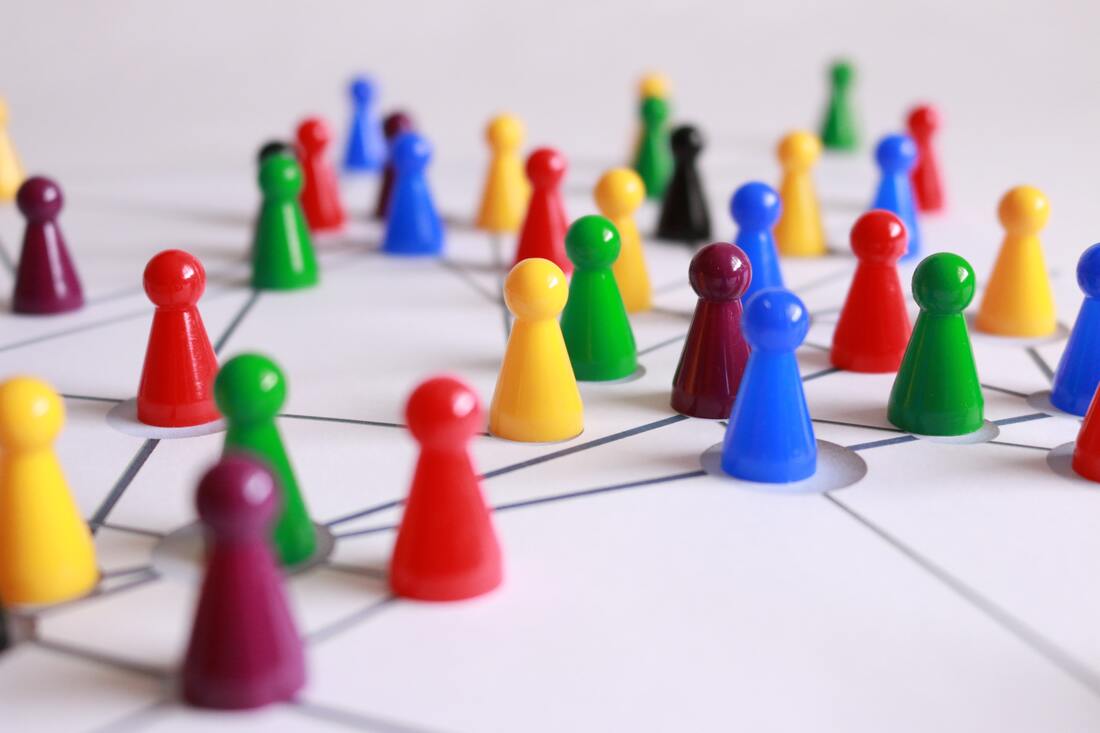
Image credit: Pixabay
To complicate the matter even further, the idea of power is related to notions that have kept numerous thinkers busy for centuries: free will, agency, responsibility, and the social system (to name a few). For example, having free will can be interpreted as having the power to act without any constraint. The ongoing debate within social sciences about agency and structure suggests that it is not easy to determine how free individuals really are in their choices. If we are not truly free as elements of the social system, how can we talk about responsibility for any actions? On the other hand, people are not mindless robots, and they do make multiple decisions throughout their daily lives. This line of thinking suggests that, in order to understand power, we may have to deal with paradoxes of human co-existence.
A variety of scholars discuss this complexity without considering the term “power” as central to their work. For instance, proponents of symbolic interactionism describe meaning-making as the uniquely human tendency to interact with the world by projecting on it ideas that exist in our minds. Each person is responsible for interpreting their environment, experiences, and other people in a certain way, as well as for acting based on these interpretations. At the same time, interactions with others inevitably shape the meanings we operate with. Unaware of these processes, we often take for granted the foundations of our worldviews (“this is just how things are”), and do not notice how ideas forming these foundations intricately intertwine with each other. Meanings that guide individual actions can be difficult for each one of us to fully comprehend and challenge, even though they could be revealed by paying closer attention to everyday communication practices.
Some scholars have drawn connections between different ideas about power or tried to categorize them. Examples include works by Lukes and Wrong as well as the Powercube project. However, I believe that a truly interdisciplinary exploration of power is yet to be done.
The project you see on this website will not only explicitly focus on the idea of power. It will also explore insights about questions of control, influence, freedom, and choice in different social contexts. This broad investigation will be guided by the following questions:
In particular, delving into research that highlights nuances of human communication can be especially fruitful, as my previous work demonstrates. My current focus on power emerged as a result of the interpretive theoretical exploration I conducted for my first book Media is us: Understanding communication and moving beyond blame. Initially aimed at expanding the concept of media, it ended up asking big questions about the human condition. This book showcases the benefits of the interdisciplinary approach by introducing the theory of micro- and macropower. The theory is built on intersections of such perspectives as Foucault’s vision of power, symbolic interactionism, social construction of reality, debates about media’s influence, Gramsci’s hegemony, six degrees of separation, and Clifford Geertz’s description of people as “animal[s] suspended in webs of significance [they themselves have] spun.”
To complicate the matter even further, the idea of power is related to notions that have kept numerous thinkers busy for centuries: free will, agency, responsibility, and the social system (to name a few). For example, having free will can be interpreted as having the power to act without any constraint. The ongoing debate within social sciences about agency and structure suggests that it is not easy to determine how free individuals really are in their choices. If we are not truly free as elements of the social system, how can we talk about responsibility for any actions? On the other hand, people are not mindless robots, and they do make multiple decisions throughout their daily lives. This line of thinking suggests that, in order to understand power, we may have to deal with paradoxes of human co-existence.
A variety of scholars discuss this complexity without considering the term “power” as central to their work. For instance, proponents of symbolic interactionism describe meaning-making as the uniquely human tendency to interact with the world by projecting on it ideas that exist in our minds. Each person is responsible for interpreting their environment, experiences, and other people in a certain way, as well as for acting based on these interpretations. At the same time, interactions with others inevitably shape the meanings we operate with. Unaware of these processes, we often take for granted the foundations of our worldviews (“this is just how things are”), and do not notice how ideas forming these foundations intricately intertwine with each other. Meanings that guide individual actions can be difficult for each one of us to fully comprehend and challenge, even though they could be revealed by paying closer attention to everyday communication practices.
Some scholars have drawn connections between different ideas about power or tried to categorize them. Examples include works by Lukes and Wrong as well as the Powercube project. However, I believe that a truly interdisciplinary exploration of power is yet to be done.
The project you see on this website will not only explicitly focus on the idea of power. It will also explore insights about questions of control, influence, freedom, and choice in different social contexts. This broad investigation will be guided by the following questions:
- What concepts, theories, topics, and practices can help us understand power in relationships between people?
- What insights do these perspectives provide about the complexity of relationships between human beings or between the individual and the social system?
In particular, delving into research that highlights nuances of human communication can be especially fruitful, as my previous work demonstrates. My current focus on power emerged as a result of the interpretive theoretical exploration I conducted for my first book Media is us: Understanding communication and moving beyond blame. Initially aimed at expanding the concept of media, it ended up asking big questions about the human condition. This book showcases the benefits of the interdisciplinary approach by introducing the theory of micro- and macropower. The theory is built on intersections of such perspectives as Foucault’s vision of power, symbolic interactionism, social construction of reality, debates about media’s influence, Gramsci’s hegemony, six degrees of separation, and Clifford Geertz’s description of people as “animal[s] suspended in webs of significance [they themselves have] spun.”

Image credit: Andrii Ganzevych
According to my theory, power works differently on different planes of social existence. If we look at a relationship within a specific pair of individuals at a specific point in time, we can easily determine who has power over whom. On this level, we can observe what I call micropower. However, the more we zoom out of this limited view, the more complicated the picture becomes. If our brains could perceive connections between all individuals over space and time, we would have to admit that no person is absolutely powerful or powerless in the grand scheme of things. We are all connected though constant interactions, and we influence one another by negotiating ideas that shape our everyday actions. I call what we observe on this level of social existence macropower. The theory implies that the micro and macro levels of society can be separated only during a thought experiment. Therefore, demanding accountability in cases of power abuse does not contradict the argument that social problems cannot be solved by finding a guilty party.
My investment in this theory is not purely intellectual. It is connected to a practical concern. The complexity of relationships between individuals and the social system is lost in the current public discourse in the United States, which coincides with the growing polarization of American society. Of all the scholarly interpretations of power, the one that has gained particular popularity comes from Karl Marx. His understanding of society as divided into conflicting social groups – some by definition powerful and others inevitably powerless – have shaped ideas promoted by critical cultural theories.
According to this interpretation, power should be seen through a binary: one either has it or doesn’t. This perspective also implies that power is stable, in the sense that it does not vary with changing circumstances. As the current climate of polarization demonstrates, collaboration becomes difficult when power relationships are described as a zero-sum game. When everybody is seen as either the oppressor or the oppressed, any dialogue may appear doomed from the start. Focusing on power as a paradox, this project will complicate the binary logic ("one either has power or doesn’t"), while not shifting blame or ignoring society’s flaws.
According to my theory, power works differently on different planes of social existence. If we look at a relationship within a specific pair of individuals at a specific point in time, we can easily determine who has power over whom. On this level, we can observe what I call micropower. However, the more we zoom out of this limited view, the more complicated the picture becomes. If our brains could perceive connections between all individuals over space and time, we would have to admit that no person is absolutely powerful or powerless in the grand scheme of things. We are all connected though constant interactions, and we influence one another by negotiating ideas that shape our everyday actions. I call what we observe on this level of social existence macropower. The theory implies that the micro and macro levels of society can be separated only during a thought experiment. Therefore, demanding accountability in cases of power abuse does not contradict the argument that social problems cannot be solved by finding a guilty party.
My investment in this theory is not purely intellectual. It is connected to a practical concern. The complexity of relationships between individuals and the social system is lost in the current public discourse in the United States, which coincides with the growing polarization of American society. Of all the scholarly interpretations of power, the one that has gained particular popularity comes from Karl Marx. His understanding of society as divided into conflicting social groups – some by definition powerful and others inevitably powerless – have shaped ideas promoted by critical cultural theories.
According to this interpretation, power should be seen through a binary: one either has it or doesn’t. This perspective also implies that power is stable, in the sense that it does not vary with changing circumstances. As the current climate of polarization demonstrates, collaboration becomes difficult when power relationships are described as a zero-sum game. When everybody is seen as either the oppressor or the oppressed, any dialogue may appear doomed from the start. Focusing on power as a paradox, this project will complicate the binary logic ("one either has power or doesn’t"), while not shifting blame or ignoring society’s flaws.
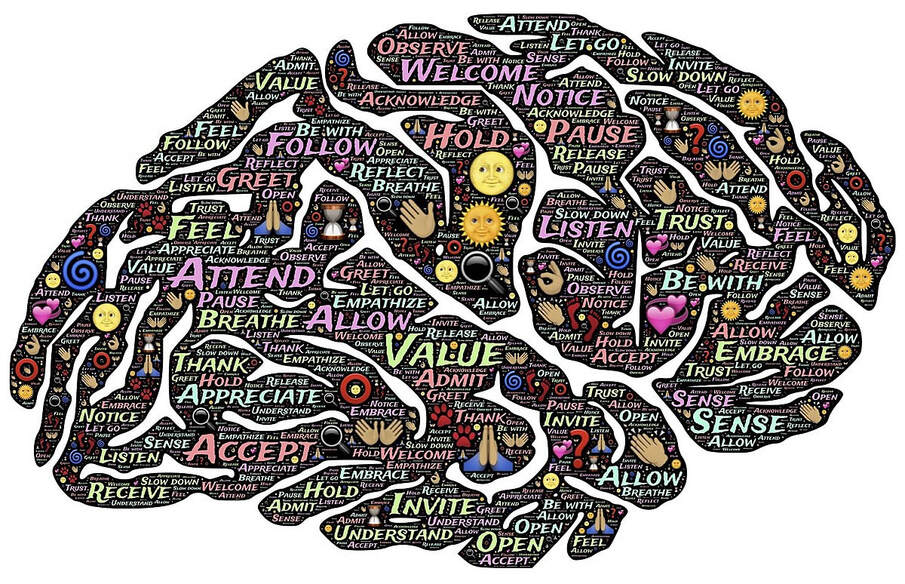
Image credit: max pixel, CC0, via Wikimedia Commons
This project will conceptualize micro- and macropower more precisely by further delving into scholarship that illuminates how we influence one another through everyday meaning-making practices, both verbal and nonverbal, conscious and unconscious. In accordance with this goal, my investigation will look at a wide variety of social contexts, including parenting, education, art, politics, commerce, and media. Drawing on research that traces the origin and impact of ideas about race, gender, sexuality, and physical ability can also provide useful angles for understanding the complexity of human-made meanings.
In addition to the questions about meanings of power, this study ask questions about power of meanings: What texts contain insights about meaning-making abilities that determine how we interact with the world and each other? What can we learn about paradoxes of power by exploring how meanings are created, reinforced, negotiated, and challenged? How can we trace connections between dominant and marginalized meanings that play a role in power relationships?
Directions of this multilayered investigation will include psychological insights into cognitive processes that determine how meaning-making works: categorization, slow and fast thinking, cognitive biases, the intuitive nature of moral judgements, and developmental stages of meaning-making abilities. I will also explore a variety of practical approaches, for example, mindfulness and Nonviolent Communication. According to proponents of mindfulness, in order not be controlled by our own mental states (e.g., stress), we should not define them through meanings that simplify our sensations and experiences. Nonviolent Communication starts when we learn not to see each other through negative meanings in our minds. By understanding how these “enemy images” shape our interactions, we may be able to produce lasting social change.
If you would like to keep reading this non-linear book, you can browse completed pages.
This project will conceptualize micro- and macropower more precisely by further delving into scholarship that illuminates how we influence one another through everyday meaning-making practices, both verbal and nonverbal, conscious and unconscious. In accordance with this goal, my investigation will look at a wide variety of social contexts, including parenting, education, art, politics, commerce, and media. Drawing on research that traces the origin and impact of ideas about race, gender, sexuality, and physical ability can also provide useful angles for understanding the complexity of human-made meanings.
In addition to the questions about meanings of power, this study ask questions about power of meanings: What texts contain insights about meaning-making abilities that determine how we interact with the world and each other? What can we learn about paradoxes of power by exploring how meanings are created, reinforced, negotiated, and challenged? How can we trace connections between dominant and marginalized meanings that play a role in power relationships?
Directions of this multilayered investigation will include psychological insights into cognitive processes that determine how meaning-making works: categorization, slow and fast thinking, cognitive biases, the intuitive nature of moral judgements, and developmental stages of meaning-making abilities. I will also explore a variety of practical approaches, for example, mindfulness and Nonviolent Communication. According to proponents of mindfulness, in order not be controlled by our own mental states (e.g., stress), we should not define them through meanings that simplify our sensations and experiences. Nonviolent Communication starts when we learn not to see each other through negative meanings in our minds. By understanding how these “enemy images” shape our interactions, we may be able to produce lasting social change.
If you would like to keep reading this non-linear book, you can browse completed pages.