Intentionality and Power
*completed pages might be rewritten over time
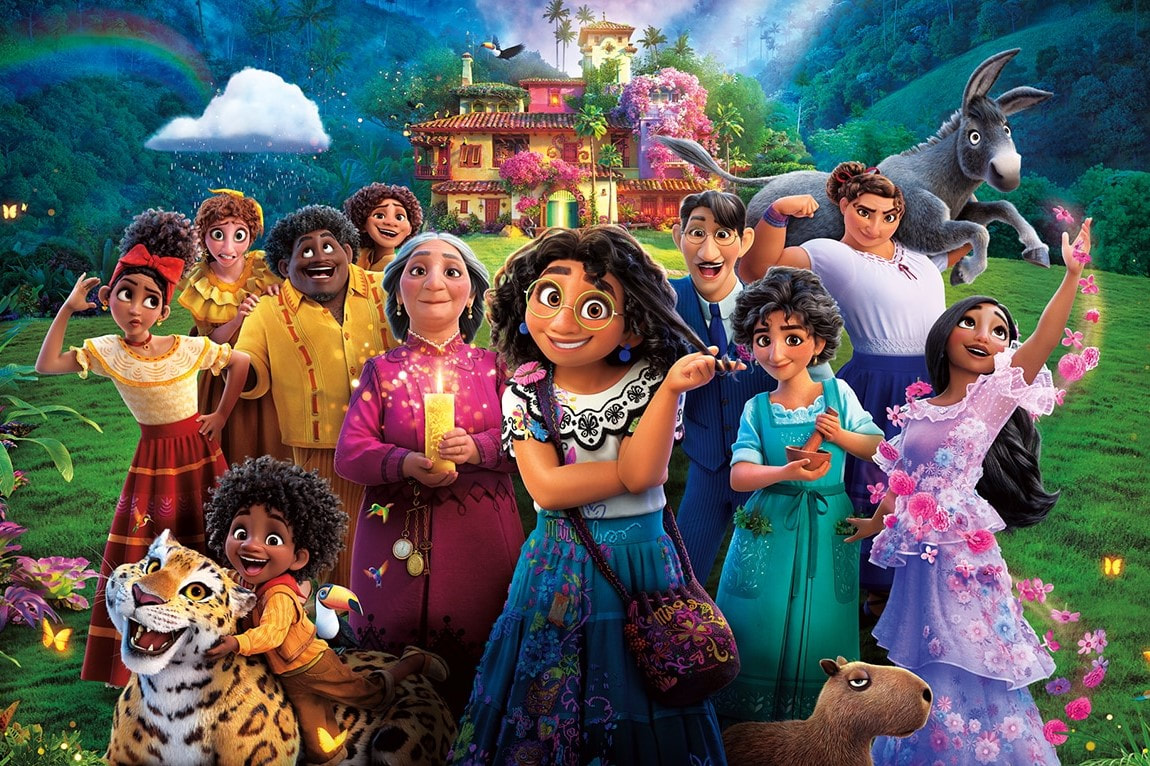
Image credit: Disney
SPOILER ALERT: This page contains spoilers about the plot and characters of Disney's Encanto.
Disney's Encanto (2021) provides a great opportunity to discuss nuances of individual power (micropower). More specifically, Encanto can be used to illustrate possible misperceptions of power related to intentions behind our actions.
In Encanto, we are introduced to a colorful cast of characters. The Family Madrigal song tells us about their "gifts" or "powers": The mood of Mirabel's aunt Pepa affects the weather. Uncle Bruno could see the future (and then he disappeared). Mirabel's mother Julieta is able to heal people with meals she cooks. Cousin Dolores has exceptional hearing. Cousin Camilio can shapeshift and take the form of any person. Mirabel's sister Isabela is an incarnation of perfection, and her sister Louisa is so strong she can lift a house. Later in the movie, Mirabel's cousin Antonio begins to understand the language of animals.
Despite the wording of the introductory song, as the movie progresses, we discover that not all of these "gifts" are actually forms of power. What matters is whether a particular character is able to use their magical abilities intentionally or not.
Intentionality can be defined as "the fact of being deliberate or purposive." The key aspects of intentionality are choice and self-awareness: an intentional action is the one that a person decides to do. I believe that individual power (micropower) is impossible without intentionality. In other words, using our individual power means making choices and being aware of this fact. If the combination of choice and self-awareness is not present, we cannot describe actions as a manifestation of power or request full accountability for these actions.
SPOILER ALERT: This page contains spoilers about the plot and characters of Disney's Encanto.
Disney's Encanto (2021) provides a great opportunity to discuss nuances of individual power (micropower). More specifically, Encanto can be used to illustrate possible misperceptions of power related to intentions behind our actions.
In Encanto, we are introduced to a colorful cast of characters. The Family Madrigal song tells us about their "gifts" or "powers": The mood of Mirabel's aunt Pepa affects the weather. Uncle Bruno could see the future (and then he disappeared). Mirabel's mother Julieta is able to heal people with meals she cooks. Cousin Dolores has exceptional hearing. Cousin Camilio can shapeshift and take the form of any person. Mirabel's sister Isabela is an incarnation of perfection, and her sister Louisa is so strong she can lift a house. Later in the movie, Mirabel's cousin Antonio begins to understand the language of animals.
Despite the wording of the introductory song, as the movie progresses, we discover that not all of these "gifts" are actually forms of power. What matters is whether a particular character is able to use their magical abilities intentionally or not.
Intentionality can be defined as "the fact of being deliberate or purposive." The key aspects of intentionality are choice and self-awareness: an intentional action is the one that a person decides to do. I believe that individual power (micropower) is impossible without intentionality. In other words, using our individual power means making choices and being aware of this fact. If the combination of choice and self-awareness is not present, we cannot describe actions as a manifestation of power or request full accountability for these actions.
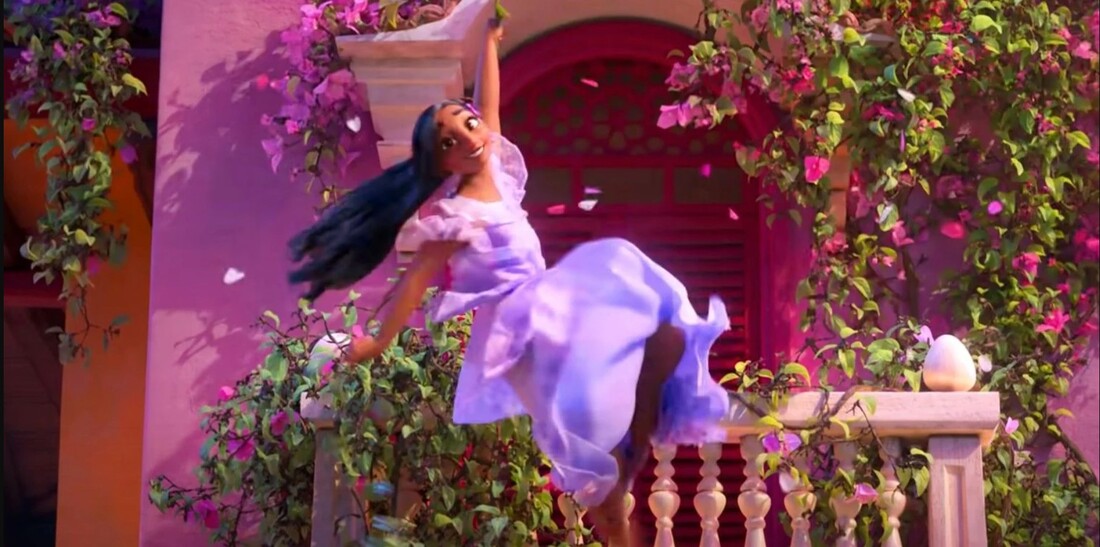
Image credit: Disney
It turns out that not all of the characters of Encanto can use their gifts intentionally.
Julieta, Camilio, Antonio, and Louisa appear to be in control of their abilities and can make a choice to use them when necessary. Julieta can decide when to cook a meal and for whom. Camilio shapeshifts for fun or to entertain people. Antonio listens to animals in order to learn what they know, or to hear what they have to say. Louisa uses her physical strength to lift things that need to be moved or fixed.
Isabela's case is slightly different. In the beginning of the film, we learn that she is perfect in every way. Her perfection manifests through movements, appearance, and the fact that she can grow beautiful flowers literally out of nothing. As the movie progresses, Isabela discovers that she does not have to be perfect and to create perfection around her. She learns to grow all sorts of plants in order to express how she is feeling in the moment. Isabela's power is about creativity, and it displays all the characteristics of intentionality.
This is not the case for Pepa, Bruno, and Dolores. These characters do not use their "gifts" on purpose. Effects of these magical "abilities" just happen to them, often creating problems.
Pepa's mood affects the weather. When she is happy, the sun is shining. When she is anxious, sad, or angry, a personal little cloud spewing rain, snow or even thunder appears over her head. Pepa clearly does not choose to have this additional nuisance. In the case of uncle Bruno, unpleasant visions of the future appear to haunt him, which has made this character an outcast and somewhat mentally unstable. Similarly, Dolores cannot turn her super-hearing on or off at will. She just has to hear everything around her, whether she wants it or not.
In my opinion, giving to Pepa, Bruno, and Dolores such "gifts" was an oversight that created irreparable plot holes. Their so-called "powers" are curses rather than blessings. This is especially evident in the case of Dolores. Since she cannot choose what to hear and what not to, her life must be a constant hell of sensory overload. Some commentators pointed out the awkwardness of having super-hearing in a house with two married couples. On top of that, towards the end of the movie we find out (in passing) that Dolores knew all along about the long-lost uncle Bruno living inside the house walls. Under the circumstances, Dolores appears strangely calm and indifferent. This obvious inconsistency led to the creation of fan theories arguing that she is a real villain of the story: she wanted to destroy the house in order to stop her sensory suffering. Indeed, these theories seem plausible, but most probably because the film creators did not think the details through.
It turns out that not all of the characters of Encanto can use their gifts intentionally.
Julieta, Camilio, Antonio, and Louisa appear to be in control of their abilities and can make a choice to use them when necessary. Julieta can decide when to cook a meal and for whom. Camilio shapeshifts for fun or to entertain people. Antonio listens to animals in order to learn what they know, or to hear what they have to say. Louisa uses her physical strength to lift things that need to be moved or fixed.
Isabela's case is slightly different. In the beginning of the film, we learn that she is perfect in every way. Her perfection manifests through movements, appearance, and the fact that she can grow beautiful flowers literally out of nothing. As the movie progresses, Isabela discovers that she does not have to be perfect and to create perfection around her. She learns to grow all sorts of plants in order to express how she is feeling in the moment. Isabela's power is about creativity, and it displays all the characteristics of intentionality.
This is not the case for Pepa, Bruno, and Dolores. These characters do not use their "gifts" on purpose. Effects of these magical "abilities" just happen to them, often creating problems.
Pepa's mood affects the weather. When she is happy, the sun is shining. When she is anxious, sad, or angry, a personal little cloud spewing rain, snow or even thunder appears over her head. Pepa clearly does not choose to have this additional nuisance. In the case of uncle Bruno, unpleasant visions of the future appear to haunt him, which has made this character an outcast and somewhat mentally unstable. Similarly, Dolores cannot turn her super-hearing on or off at will. She just has to hear everything around her, whether she wants it or not.
In my opinion, giving to Pepa, Bruno, and Dolores such "gifts" was an oversight that created irreparable plot holes. Their so-called "powers" are curses rather than blessings. This is especially evident in the case of Dolores. Since she cannot choose what to hear and what not to, her life must be a constant hell of sensory overload. Some commentators pointed out the awkwardness of having super-hearing in a house with two married couples. On top of that, towards the end of the movie we find out (in passing) that Dolores knew all along about the long-lost uncle Bruno living inside the house walls. Under the circumstances, Dolores appears strangely calm and indifferent. This obvious inconsistency led to the creation of fan theories arguing that she is a real villain of the story: she wanted to destroy the house in order to stop her sensory suffering. Indeed, these theories seem plausible, but most probably because the film creators did not think the details through.
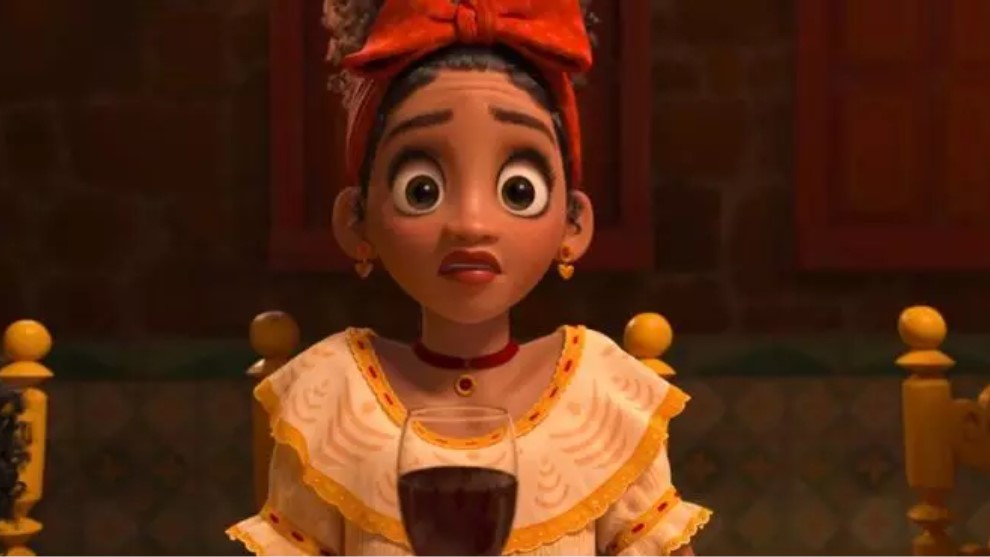
Image credit: Disney
Why is it so important to talk about intentionality when we are discussing the nature of power?
As I point out throughout this hypertext book, power is an often-misunderstood aspect of the human condition. Misunderstanding of power means misunderstanding oneself and others. In particular, the misperception comes when we see power as something monolithic, almost like a thing that one either has or does not. In contrast, I argue that power exists at the intersection of each person's individual characteristics, circumstances, actions, and connections with others. Because this intersection is ever-changing and hard to grasp, the line between power vs. powerlessness is blurry and hard to define. Encanto's example demonstrates how we can mistakenly consider something to be a person's power if we do not take into consideration this person's self-aware choices.
Why is thinking about intentionality so important as we are trying to understand power?
If we do not consider the intentionality, we might think that a certain person has control over something, when in fact she doesn't. This can become a problem, because when we think that somebody has control over something, it is easy to blame them when things go wrong. When we think that something is within another person's power while it actually isn't, blaming them is unhelpful and unproductive. On the other hand, when we notice intentionality in our actions and actions of others, this allows us to hold ourselves or others accountable for choices we make - and to learn how to make different choices.
Taking into consideration intentionality, we can see why machines and algorithms do not have power, even though people can be impacted by their workings. Note that machine is defined as "an apparatus using or applying mechanical power and having several parts, each with a definite function and together performing a particular task" - but this is not the same as social power that characterises people and their relationships, so we cannot hold machines or algorithms accountable for the impact they have. However, we can certainly discuss the accountability of their creators, or invite them to make different choices.
Animals also do not have power in the sense that people do. Animal's behaviour is mostly guided by instincts; no matter how intelligent they are, they do not make the same kind of self-aware choices that characterise human actions. This is why, when we hear about trials involving animals, we raise our eyebrows. Such trials do not make sense in the context of what we know about animal behavior today. We cannot hold animals accountable for their actions in the same way as do with humans.
However, people cannot be held accountable for all of their actions simply by the virtue of being human. First, we are an animal species and we are often guided by instincts and emotions beyond our full understanding or control. Second, our actions are to a great extent shaped by our circumstances. I do believe that individuals have at least a certain amount of free will, otherwise intentionality would not be possible to begin with. However, it can be legitimately difficult to determine where power ends and powerlessness begins.
Intentionality is the clue that helps us see whether power is involved and whether we can request some accountability. Influence itself is not a sufficient criterion. For example, mental illness clearly is not a power of the person who has it. Actions of a person that has mental illness can have an impact on others, but we cannot hold this person fully accountable for their actions because choice and awareness are often lacking. Nobody decides to have mental illness, so actions of a mentally ill person are not entirely free, even if it appears that this person is making choices.
Why is it so important to talk about intentionality when we are discussing the nature of power?
As I point out throughout this hypertext book, power is an often-misunderstood aspect of the human condition. Misunderstanding of power means misunderstanding oneself and others. In particular, the misperception comes when we see power as something monolithic, almost like a thing that one either has or does not. In contrast, I argue that power exists at the intersection of each person's individual characteristics, circumstances, actions, and connections with others. Because this intersection is ever-changing and hard to grasp, the line between power vs. powerlessness is blurry and hard to define. Encanto's example demonstrates how we can mistakenly consider something to be a person's power if we do not take into consideration this person's self-aware choices.
Why is thinking about intentionality so important as we are trying to understand power?
If we do not consider the intentionality, we might think that a certain person has control over something, when in fact she doesn't. This can become a problem, because when we think that somebody has control over something, it is easy to blame them when things go wrong. When we think that something is within another person's power while it actually isn't, blaming them is unhelpful and unproductive. On the other hand, when we notice intentionality in our actions and actions of others, this allows us to hold ourselves or others accountable for choices we make - and to learn how to make different choices.
Taking into consideration intentionality, we can see why machines and algorithms do not have power, even though people can be impacted by their workings. Note that machine is defined as "an apparatus using or applying mechanical power and having several parts, each with a definite function and together performing a particular task" - but this is not the same as social power that characterises people and their relationships, so we cannot hold machines or algorithms accountable for the impact they have. However, we can certainly discuss the accountability of their creators, or invite them to make different choices.
Animals also do not have power in the sense that people do. Animal's behaviour is mostly guided by instincts; no matter how intelligent they are, they do not make the same kind of self-aware choices that characterise human actions. This is why, when we hear about trials involving animals, we raise our eyebrows. Such trials do not make sense in the context of what we know about animal behavior today. We cannot hold animals accountable for their actions in the same way as do with humans.
However, people cannot be held accountable for all of their actions simply by the virtue of being human. First, we are an animal species and we are often guided by instincts and emotions beyond our full understanding or control. Second, our actions are to a great extent shaped by our circumstances. I do believe that individuals have at least a certain amount of free will, otherwise intentionality would not be possible to begin with. However, it can be legitimately difficult to determine where power ends and powerlessness begins.
Intentionality is the clue that helps us see whether power is involved and whether we can request some accountability. Influence itself is not a sufficient criterion. For example, mental illness clearly is not a power of the person who has it. Actions of a person that has mental illness can have an impact on others, but we cannot hold this person fully accountable for their actions because choice and awareness are often lacking. Nobody decides to have mental illness, so actions of a mentally ill person are not entirely free, even if it appears that this person is making choices.

Image credit: Oluremi Adebayo
Intentionality characterizes individual power (micropower), which, according to my theory, has two main forms: ability and influence. Let's consider power as ability first.
Intentionally using our physical abilities is fundamental for being human, or, more specifically, for being a living human being. A person whose body fulfills basic physical functions without choice and awareness is as good as dead; this person does not have the true ability to act (see Power on/off). The confusing part is that an ability can be a function of our body when used unintentionally, but become a form of power when intentionality is involved.
Here is how we can describe this differentiation in the case of seeing: On the most basic level, bodily function exists without intentionality. If somebody forces my eyes to be open, I will see, even if I don’t want to see. This is not a form of power (seeing what I do not want to see happens to me, I do not make a choice to see). Intentional use of this same ability makes it a form of power: I can choose what to look at. Understanding how the ability works allows me to hone my skills. For example, I can train myself to notice certain things while ignoring others (develop attention to certain details).
Here is another example: We do not talk about the "power of breathing" when we discuss the bodily process that is indispensable for being alive. However, we can talk about purposefully practicing different ways to breathe: for example, slowing down or focusing on our breathing as part of a meditation. In this case, it makes sense to talk about the power of breathing, as we choose to breathe in a certain way. Learning to routinely breathe in a certain way is also a form of power, even if sometimes, as a result of this learning, we may breathe this way without thinking about it.
By the same token, other physical abilities can become a form of power when used intentionally. For example, speaking becomes a form of power when I choose to speak to some people and to say certain things; walking becomes a form of power when I choose to walk in a certain direction in order to achieve specific goals. These and other physical abilities become power when I consider them as skills that require deeper understanding and improvement. (Notice how this difference is expressed through language in the case of some abilities, for example when we compare seeing to looking, or hearing to listening).
Intentionality characterizes individual power (micropower), which, according to my theory, has two main forms: ability and influence. Let's consider power as ability first.
Intentionally using our physical abilities is fundamental for being human, or, more specifically, for being a living human being. A person whose body fulfills basic physical functions without choice and awareness is as good as dead; this person does not have the true ability to act (see Power on/off). The confusing part is that an ability can be a function of our body when used unintentionally, but become a form of power when intentionality is involved.
Here is how we can describe this differentiation in the case of seeing: On the most basic level, bodily function exists without intentionality. If somebody forces my eyes to be open, I will see, even if I don’t want to see. This is not a form of power (seeing what I do not want to see happens to me, I do not make a choice to see). Intentional use of this same ability makes it a form of power: I can choose what to look at. Understanding how the ability works allows me to hone my skills. For example, I can train myself to notice certain things while ignoring others (develop attention to certain details).
Here is another example: We do not talk about the "power of breathing" when we discuss the bodily process that is indispensable for being alive. However, we can talk about purposefully practicing different ways to breathe: for example, slowing down or focusing on our breathing as part of a meditation. In this case, it makes sense to talk about the power of breathing, as we choose to breathe in a certain way. Learning to routinely breathe in a certain way is also a form of power, even if sometimes, as a result of this learning, we may breathe this way without thinking about it.
By the same token, other physical abilities can become a form of power when used intentionally. For example, speaking becomes a form of power when I choose to speak to some people and to say certain things; walking becomes a form of power when I choose to walk in a certain direction in order to achieve specific goals. These and other physical abilities become power when I consider them as skills that require deeper understanding and improvement. (Notice how this difference is expressed through language in the case of some abilities, for example when we compare seeing to looking, or hearing to listening).

Image credit: cottonbro studio
What about individual power as influence?
According to my interpretation, power as influence has always something to do with limited resources, which are related to having, doing, and being. Let's review these three aspects.
1) Having: There is only one apple on the table. If we both want it, but I get it, I have the power in this scenario.
2) Doing: If I want to do A and you want to do B, by making sure that we do B you assert your power in this situation.
3) Being: In each little corner of the universe, things can exist only in one specific way (imagining other ways requires bringing in the concept of multiple universes). If I shape the way things are, even if this seems as mundane as choosing to put a table in one room of my house as opposed to another room, I exercise my power.
As I already mentioned above, we can think of situations where influence does not equal power, for example, mental illness. Another example would be acting under the influence of strong emotions that one cannot control. In all other cases, when we make self-aware choices, we appear to be using our power, and we should be held accountable for our actions. However, the scholarship into complexities of free will suggests that the issue of accountability should be approached with caution. Although we can say that, in most cases, our influence comes with some degree of choice and awareness, our freedom to choose and awareness about our choices are not absolute. As I previously mentioned, we do not fully control our circumstances or are aware of how they shape our decisions.
The other day, I was looking at my footstep in the snow. If me leaving this footprint is a form of power, this would be power as influence. More specifically, it is the form of influence that I classify as being. Crystal of snow can be piled up in one certain way at a time, so if I step on them, I determine how they are. But is my footprint in the snow really a manifestation of my power?
Same as in the case of power as ability, the differences between influence coming from a bodily function (not power) and influence as a result of awareness and choice (power) are subtle. Walking is, after all, a function of our body on the most basic level, but it becomes a form of power when we decide how to walk and in what direction. Following this logic, leaving a footstep in the snow is not necessarily a manifestation of power, unless I did it intentionally (stepped in a certain place in a certain way for a certain reason).
Related to my footprint example, the famous short story by Ray Bradbury A Sound of Thunder (spoilers ahead) offers more food for thought. In this story, adventurous hunters from the year 2055 use services of a time-travelling safari to visit the era of dinosaurs. One of the hunters, Eckels, panics and does what he was not supposed to do: get off of a special levitating path and stumble into a prehistoric forest. He is eventually able to find his way to the time machine. Upon returning to the future, characters discover that, because Eckels stepped on a butterfly while running through the forest, the course of history has been changed.
If you think of it, stepping on a butterfly was not even necessary. The fact that Eckels left footprints, and probably broke some plans while running through the forest, should have been enough for him to affect the course of history. In this story, we can see a combination of free choice and circumstances affect character’s decisions. Eckels made the choice to engage in the time-travelling safari. He did not make the choice to jump off the path (he was influenced by emotions) but he did decide to walk toward the time machine. He is accountable for changing the future at least to some extent. A safari guide named Travis, believing that Eckels is fully accountable for what he has done, shoots him in the last line of the story. However, we can question Travis's judgement. After all, there was a degree of powerlessness in Eckels's actions. In addition, Travis himself made a choice to offer this safari as a service, so he should also be held accountable for what has happened to the world as a result of Eckels's blunder.
Eckels’s history-changing footprints are much more significant that my own footprint on the snow. But we should remember that sometimes a seemingly insignificant act can have important impact over time, especially in combination with actions of many other people (for example, think of the act of throwing a piece of trash on the ground). I did not make the decision to leave the footprint, but I did make the decision to walk in the snow.
Our acts, even the seemingly smaller and insignificant ones, can have a ripple effect that will remain unknown to individuals who took these actions. At the same time, many of these acts involve at least some level of choice and awareness - although this is not the awareness of the ripple effect or the choice to have this effect to begin with.
***
To sum it up: I define individual power as a combination of one's abilities and influences; taking intentionality into consideration allows me to specify that individual power (micropower) is a combination of one's abilities and influences used intentionally. Because full awareness of all our actions is impossible, and because our choices are only partially free, individual power always coexists to a certain degree with powerlessness. This complicates (but not eliminates) the need to acknowledge responsibility and hold ourselves and others accountable for our actions.
Following the logic of intentionality, I argue that our power ends at the point where we cannot possibly have awareness of the full scope of consequences of our choices.
SOURCES:
DisneyMusicVEVO. (2022). Diane Guerrero, Stephanie Beatriz - What Else Can I Do? (From "Encanto").
https://www.youtube.com/watch?v=bBeZSuHI4Qc&ab_channel=DisneyMusicVEVO
DisneyMusicVEVO. (2022). Stephanie Beatriz, Olga Merediz, Encanto - Cast - The Family Madrigal (From "Encanto").
https://www.youtube.com/watch?v=Yp5nPGWWMh4&ab_channel=DisneyMusicVEVO
Film Theory. (2022). Dolores BROKE The Magic! (Disney Encanto).
https://www.youtube.com/watch?v=Xz2oowy5JxY&t=9s&ab_channel=TheFilmTheorists
Honest Trailers. (2022). Encanto.
https://www.youtube.com/watch?v=EIJjvxDakxU&ab_channel=ScreenJunkies
Lee, A. (2020). Pigs might try. History Today.
https://www.historytoday.com/archive/natural-histories/pigs-might-try#:~:text=Animal%20trials%20were%20a%20remarkably,manner%20of%20creatures%20and%20crimes.
Wikipedia. (n.d.). A Sound of Thunder.
https://en.wikipedia.org/wiki/A_Sound_of_Thunder
What about individual power as influence?
According to my interpretation, power as influence has always something to do with limited resources, which are related to having, doing, and being. Let's review these three aspects.
1) Having: There is only one apple on the table. If we both want it, but I get it, I have the power in this scenario.
2) Doing: If I want to do A and you want to do B, by making sure that we do B you assert your power in this situation.
3) Being: In each little corner of the universe, things can exist only in one specific way (imagining other ways requires bringing in the concept of multiple universes). If I shape the way things are, even if this seems as mundane as choosing to put a table in one room of my house as opposed to another room, I exercise my power.
As I already mentioned above, we can think of situations where influence does not equal power, for example, mental illness. Another example would be acting under the influence of strong emotions that one cannot control. In all other cases, when we make self-aware choices, we appear to be using our power, and we should be held accountable for our actions. However, the scholarship into complexities of free will suggests that the issue of accountability should be approached with caution. Although we can say that, in most cases, our influence comes with some degree of choice and awareness, our freedom to choose and awareness about our choices are not absolute. As I previously mentioned, we do not fully control our circumstances or are aware of how they shape our decisions.
The other day, I was looking at my footstep in the snow. If me leaving this footprint is a form of power, this would be power as influence. More specifically, it is the form of influence that I classify as being. Crystal of snow can be piled up in one certain way at a time, so if I step on them, I determine how they are. But is my footprint in the snow really a manifestation of my power?
Same as in the case of power as ability, the differences between influence coming from a bodily function (not power) and influence as a result of awareness and choice (power) are subtle. Walking is, after all, a function of our body on the most basic level, but it becomes a form of power when we decide how to walk and in what direction. Following this logic, leaving a footstep in the snow is not necessarily a manifestation of power, unless I did it intentionally (stepped in a certain place in a certain way for a certain reason).
Related to my footprint example, the famous short story by Ray Bradbury A Sound of Thunder (spoilers ahead) offers more food for thought. In this story, adventurous hunters from the year 2055 use services of a time-travelling safari to visit the era of dinosaurs. One of the hunters, Eckels, panics and does what he was not supposed to do: get off of a special levitating path and stumble into a prehistoric forest. He is eventually able to find his way to the time machine. Upon returning to the future, characters discover that, because Eckels stepped on a butterfly while running through the forest, the course of history has been changed.
If you think of it, stepping on a butterfly was not even necessary. The fact that Eckels left footprints, and probably broke some plans while running through the forest, should have been enough for him to affect the course of history. In this story, we can see a combination of free choice and circumstances affect character’s decisions. Eckels made the choice to engage in the time-travelling safari. He did not make the choice to jump off the path (he was influenced by emotions) but he did decide to walk toward the time machine. He is accountable for changing the future at least to some extent. A safari guide named Travis, believing that Eckels is fully accountable for what he has done, shoots him in the last line of the story. However, we can question Travis's judgement. After all, there was a degree of powerlessness in Eckels's actions. In addition, Travis himself made a choice to offer this safari as a service, so he should also be held accountable for what has happened to the world as a result of Eckels's blunder.
Eckels’s history-changing footprints are much more significant that my own footprint on the snow. But we should remember that sometimes a seemingly insignificant act can have important impact over time, especially in combination with actions of many other people (for example, think of the act of throwing a piece of trash on the ground). I did not make the decision to leave the footprint, but I did make the decision to walk in the snow.
Our acts, even the seemingly smaller and insignificant ones, can have a ripple effect that will remain unknown to individuals who took these actions. At the same time, many of these acts involve at least some level of choice and awareness - although this is not the awareness of the ripple effect or the choice to have this effect to begin with.
***
To sum it up: I define individual power as a combination of one's abilities and influences; taking intentionality into consideration allows me to specify that individual power (micropower) is a combination of one's abilities and influences used intentionally. Because full awareness of all our actions is impossible, and because our choices are only partially free, individual power always coexists to a certain degree with powerlessness. This complicates (but not eliminates) the need to acknowledge responsibility and hold ourselves and others accountable for our actions.
Following the logic of intentionality, I argue that our power ends at the point where we cannot possibly have awareness of the full scope of consequences of our choices.
SOURCES:
DisneyMusicVEVO. (2022). Diane Guerrero, Stephanie Beatriz - What Else Can I Do? (From "Encanto").
https://www.youtube.com/watch?v=bBeZSuHI4Qc&ab_channel=DisneyMusicVEVO
DisneyMusicVEVO. (2022). Stephanie Beatriz, Olga Merediz, Encanto - Cast - The Family Madrigal (From "Encanto").
https://www.youtube.com/watch?v=Yp5nPGWWMh4&ab_channel=DisneyMusicVEVO
Film Theory. (2022). Dolores BROKE The Magic! (Disney Encanto).
https://www.youtube.com/watch?v=Xz2oowy5JxY&t=9s&ab_channel=TheFilmTheorists
Honest Trailers. (2022). Encanto.
https://www.youtube.com/watch?v=EIJjvxDakxU&ab_channel=ScreenJunkies
Lee, A. (2020). Pigs might try. History Today.
https://www.historytoday.com/archive/natural-histories/pigs-might-try#:~:text=Animal%20trials%20were%20a%20remarkably,manner%20of%20creatures%20and%20crimes.
Wikipedia. (n.d.). A Sound of Thunder.
https://en.wikipedia.org/wiki/A_Sound_of_Thunder